


Basic Iridology
Fundamentals of Basic Iridology and Optical Assessment
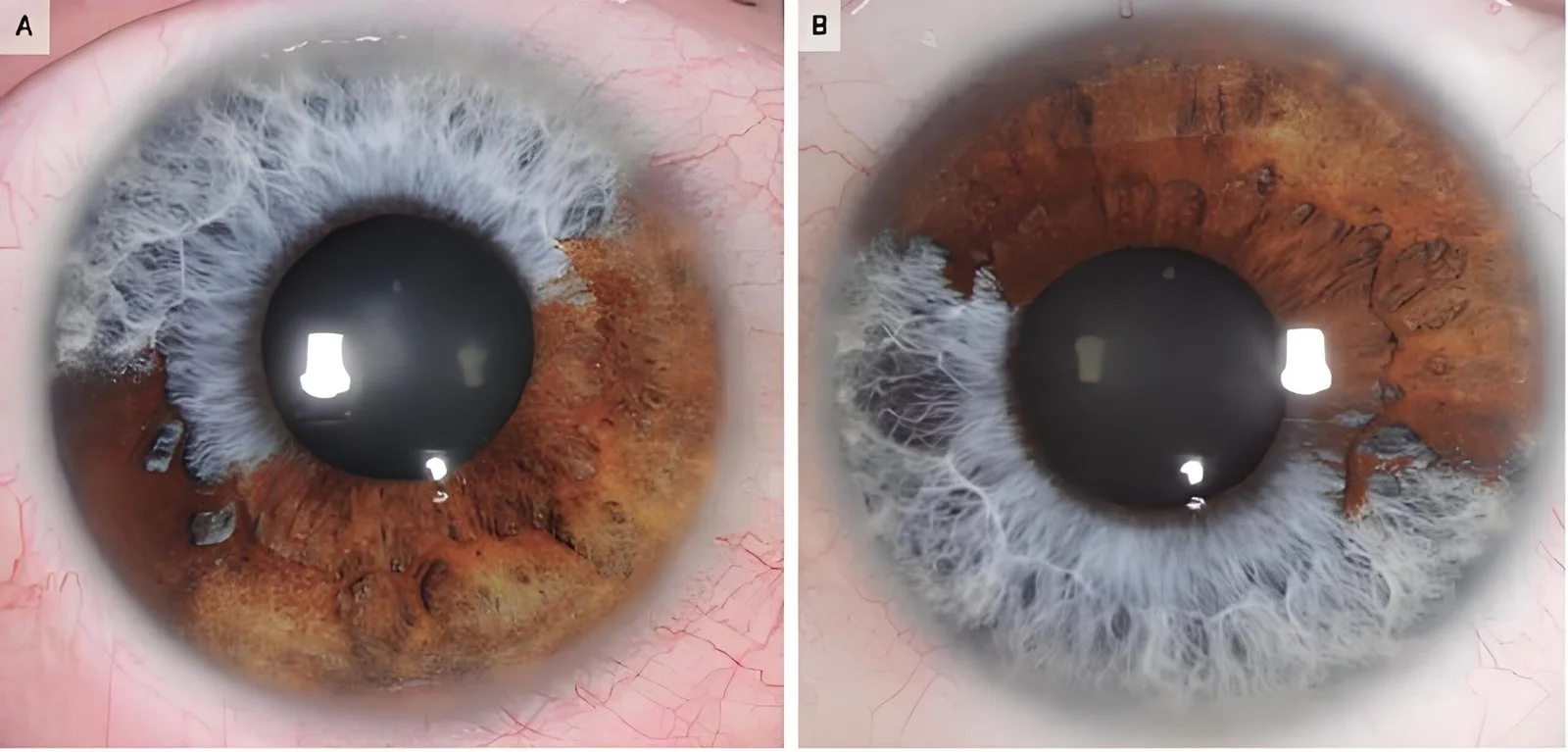
Basic iridology is the observational study of the patterns, colours, and structural markings in the iris to evaluate constitutional strengths, inherent tendencies, and tissue integrity. This complementary practice serves as an educational framework for lifestyle coaching and functional wellness rather than a conventional clinical investigation. Practitioners use specialised optical magnifiers and digital sensors to inspect the microstructures of the eye without invasive contact.
The reliability of an iris evaluation depends on precise optical alignment, systematic sector mapping, and a clear distinction between holistic assessment and medical pathology. Integrating standard observation routines with dedicated optical devices allows wellness consultants to document baseline features systematically over time.
Foundational Concepts in Basic Iridology
The practice of basic iridology views the iris as an intricate map reflecting constitutional individuality and genetic predispositions. Originating in nineteenth-century Europe, this discipline analyses structural density, pigment accumulations, and radial fibres rather than ocular pathologies. Modern practitioners evaluate the stroma, collarette, and pupillary zone to help clients understand their holistic vitality patterns.
In contemporary wellness settings, assessments focus on tissue condition, autonomic nervous system tone, and systemic stress indicators. Observations provide an educational baseline that guides personal nutritional choices, stress management routines, and restorative habits. The method observes surface features and comparative balance rather than internal biochemical processes directly.
Iris analysis is strictly an educational tool and holistic health-management reference. It does not diagnose, treat, or cure any medical disease, and it cannot replace a consultation or clinical examination with a qualified doctor.
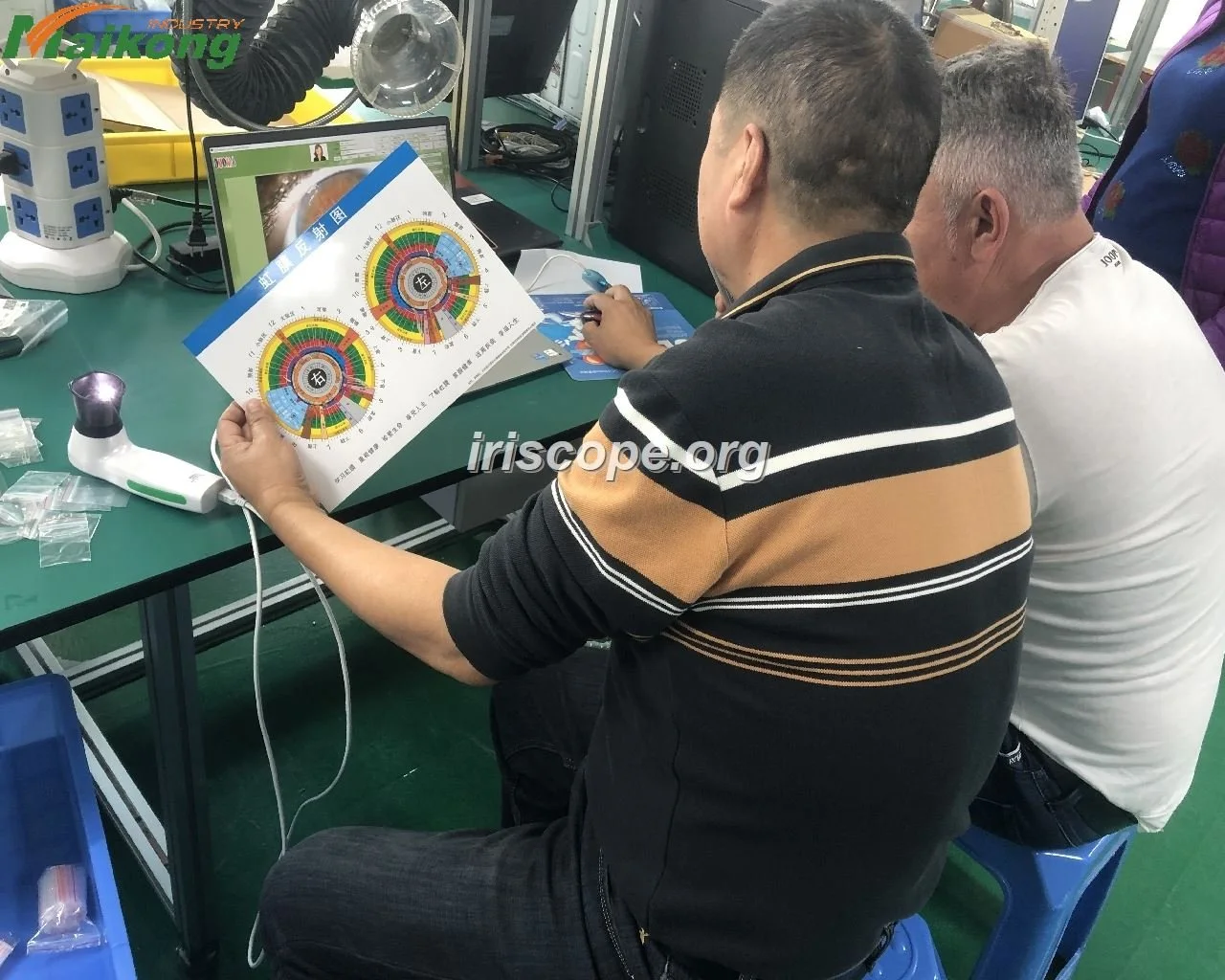
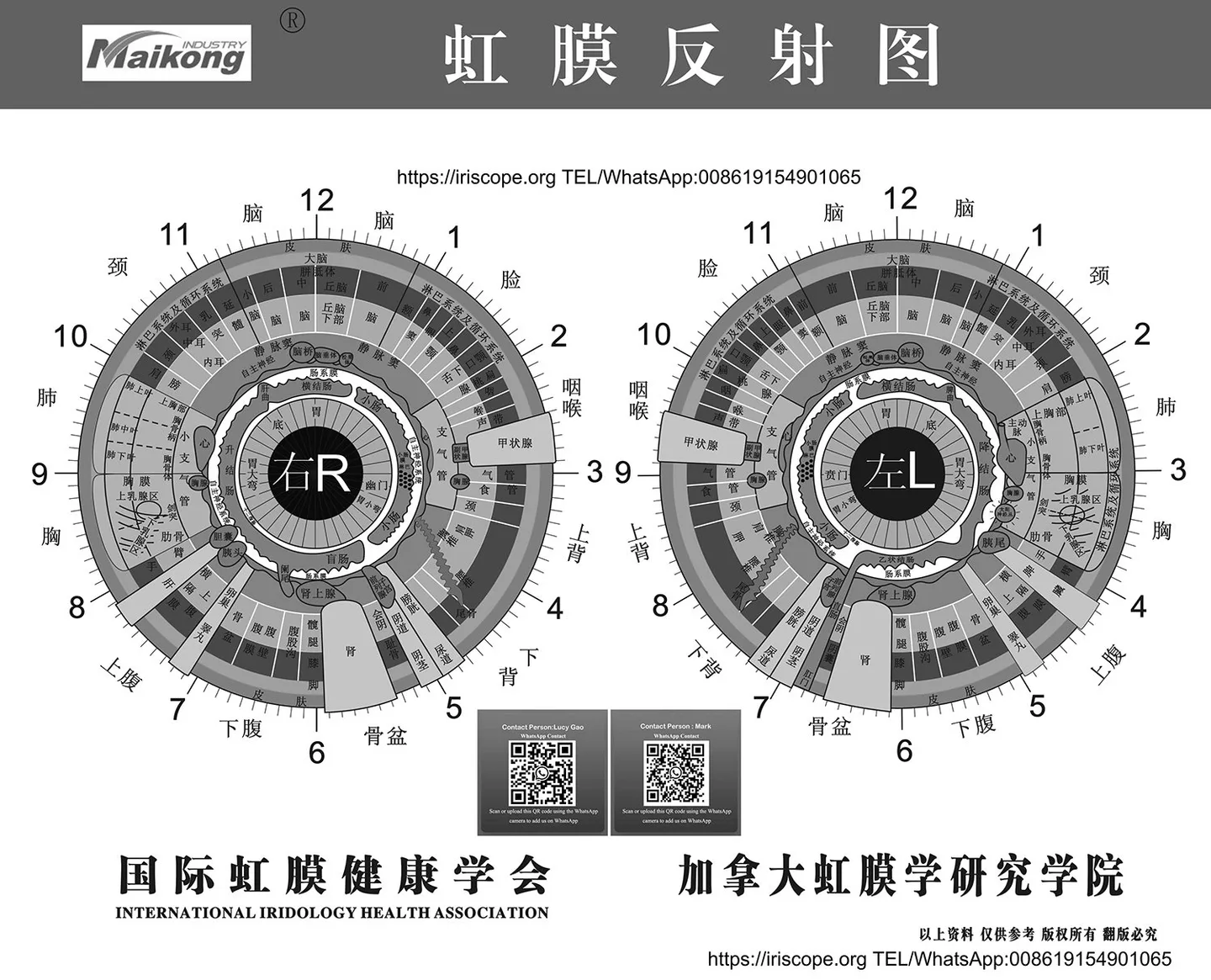
Interpreting Reflex Zones with an Iridology Chart
An iridology chart divides the circular iris into specific concentric zones and radial segments corresponding to various bodily systems. The right iris corresponds to the right side of the body, whereas the left iris mirrors the left side, with paired organs positioned accordingly. Central rings traditionally relate to digestive absorption and the stomach, moving outward toward muscular, circulatory, and lymphatic reflex areas.
Practitioners in settings such as a functional medicine practice, a private detox retreat, or an anti-aging and longevity wellness clinic use these maps to structure client discussions. Identifying areas of altered fibre spacing or localised pigment concentrations helps direct attention toward overall vitality support and gentle lifestyle changes. The map provides a coherent visual reference during initial consultations and subsequent wellness reviews.
Sector interpretations should always be evaluated alongside complete lifestyle histories, dietary habits, and hydration levels to form a responsible holistic overview.
Iris Photography and Optical Equipment Specifications
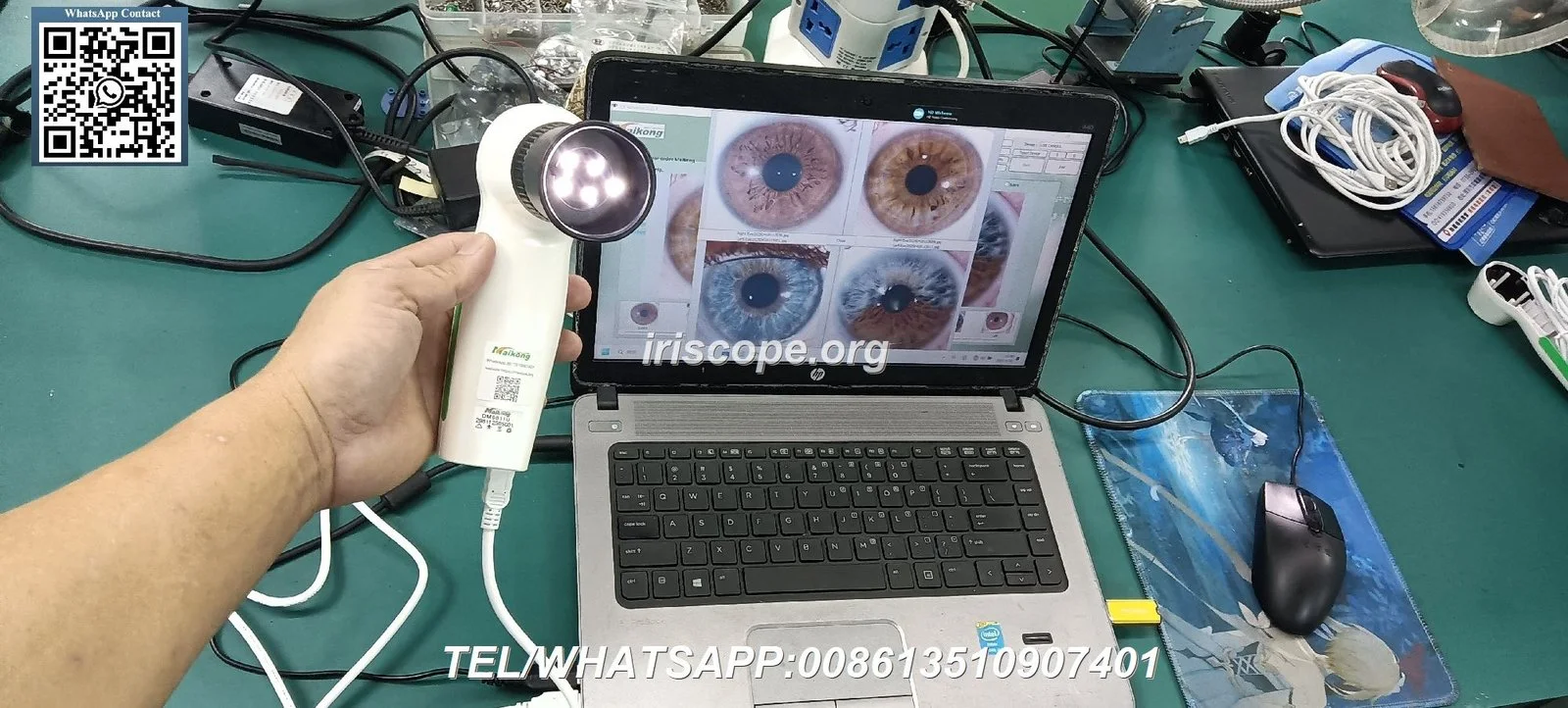
Accurate iris observation requires steady, non-glare illumination and high-resolution optical magnification that standard mobile phone cameras cannot achieve. Modern practitioners employ a specialised iriscope or digital iridology camera designed specifically to photograph the spherical, reflective surface of the human eye. Systems manufactured by MAIKONG connect directly via USB, drawing power from the host computer to maintain uniform field illumination without cumbersome external power packs.
The GY-9822U digital iriscope uses a high-grade 12.0-megapixel sensor combined with an integrated DSP image processor and an optical stabilizer to produce crisp, repeatable iris records. A circular array of balanced LED illuminators around the coated lens minimises corneal reflection while adjustable focus allows fine tuning for varying eye depths. The handset features an integrated digital pause and single-button capture mechanism, enabling smooth operation during delicate client sessions.
| Specification Item | Hardware Detail | Operational Scope |
| Sensor Model | 12.0 Megapixels | High-resolution CCD sensor capturing delicate stromal fibres |
| Lens System | 30X Iris Lens | Imported coated optics with protective cap and dual hair-lens compatibility |
| Illumination | Integrated LED | Balanced ring lighting with automatic white balance and contrast filtering |
| Packaging | Leather PU Box | Protective carrying case including 1.5-metre cable, chart, CD, and manual |
Digital Analysis and Client Record Software
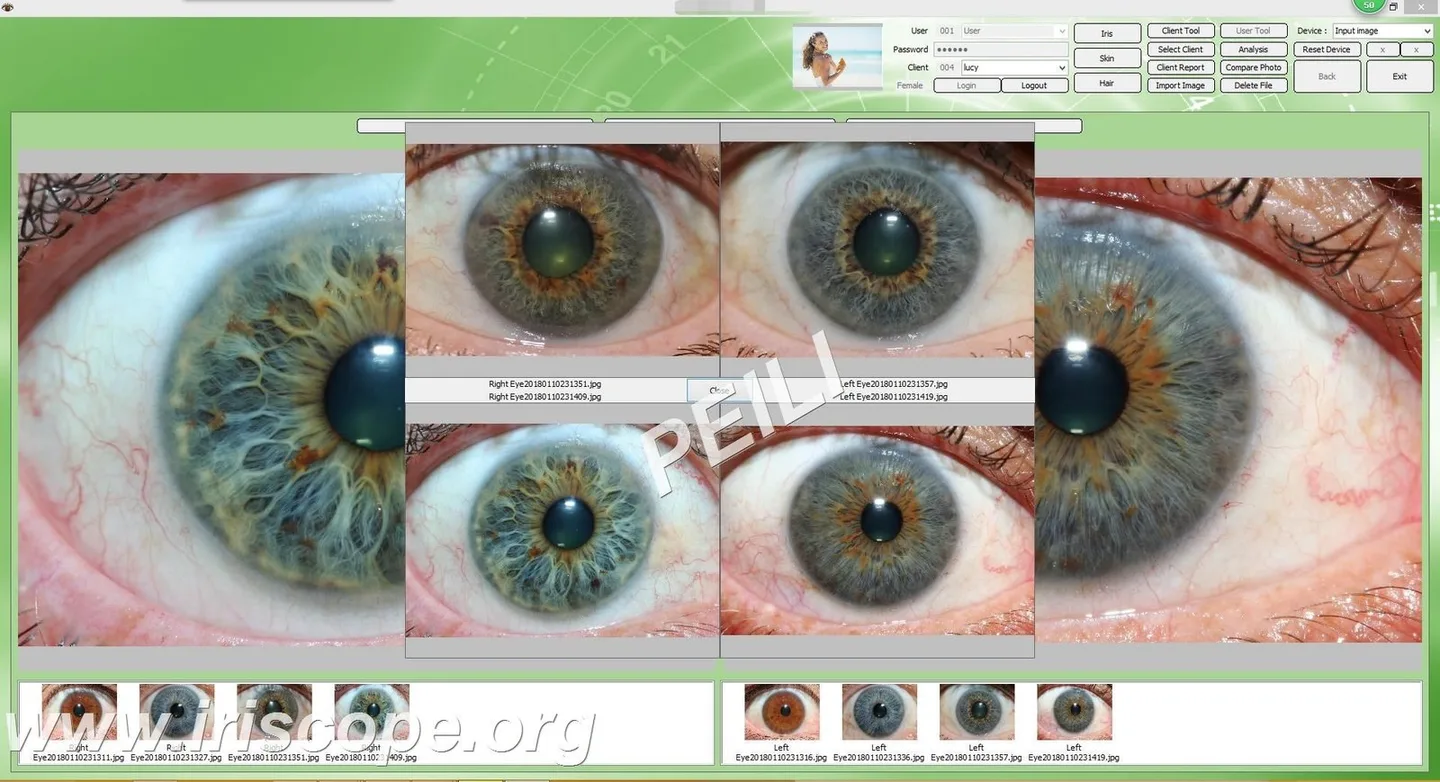
Modern iris evaluation benefits significantly from dedicated software that standardises record-keeping, client tracking, and comparative historical reviews. Digital suites allow consultants to store high-resolution images tagged by date and time, enabling visual progress tracking across extended wellness programmes. Standard software functions also provide structured educational reporting tools and customizable health product cross-references for natural product advisors.
The professional software supports Windows operating systems including Windows XP, Vista, Windows 7, 8, 10, and Windows 11 in both 32-bit and 64-bit architectures, alongside Apple macOS environments. It operates across seventeen languages, including English, Spanish, French, German, Italian, Portuguese, Russian, and Chinese. The system does not support Android, Linux, or Unix operating platforms, making proper hardware selection essential prior to installation.
- Connect the supplied 4GB USB drive to an available computer USB port to access the setup utilities.
- Launch the executable installation programme and accept standard system prompts until core files are installed.
- Disable any internal built-in web cameras via the computer Device Manager if conflicting video inputs appear.
- Disconnect the USB storage drive and insert the primary camera cable into a high-speed USB port.
- Insert the dedicated metal USB encryption key dongle required for software security and operational activation.
- Launch the software shortcut created on the computer desktop to verify camera feed synchronization and begin assessment.
- Begin entering client records, storing new photographic scans, and generating structured constitutional evaluation files.
Considerations for UK Practitioners and Distributors
Selecting appropriate equipment in the United Kingdom requires balancing build quality, long-term technical reliability, and responsive after-sales service. Professional devices are engineered as durable electronic instruments with an expected service life of 5 to 10 years under regular clinic handling. When investing in practice infrastructure, practitioners should evaluate physical housing robustness, software compatibility, and the availability of direct technical assistance.
Commercial organisations, vocational academies, and wellness wholesalers can access comprehensive OEM and ODM solutions to tailor imaging equipment to their regional branding requirements. Manufacturers offer customizable exterior moulds, bespoke casing colours, branded software interfaces, and localized language configurations to help training institutions and distributors expand their product reach efficiently.
| Service Area | Standard Term | Practical Description |
| Equipment Life | 5 to 10 Years | Solid electronic design suited for long-term daily consultative application |
| Factory Warranty | One Year Minimum | Covers non-human material and manufacturing defects with return-to-factory repair |
| Custom OEM Scope | 50 to 200 Units | Customised logo, bespoke packaging, and unique graphic styling for brand partners |
| Quality Standard | ISO9000 and CE | Manufacturing and quality inspection procedures managed under standard quality processes |
Prospective partners should review purchase agreements carefully, noting that supplier documentation states a baseline one-year warranty for non-human faults alongside reference terms of up to thirteen months for manufacturing defects. Force majeure events and indirect business interruption losses are excluded from coverage. Buyers are encouraged to clarify exact repair procedures, software updates, and shipment policies directly prior to executing high-volume commercial orders.
Frequently Asked Questions About Basic Iridology
Can basic iridology detect specific internal diseases or infections?
No, basic iridology does not detect, diagnose, or name specific clinical diseases or active microbial infections. It serves as an educational framework for observing inherited constitutional strengths, structural tissue density, and holistic vitality balance. All medical symptoms and disease concerns require formal evaluation by a registered medical doctor.
What equipment does a beginner require to practice basic iridology?
A beginner requires a reliable light source, a dedicated optical magnifier or digital iriscope, and an anatomically aligned iris chart. Digital USB cameras offer the advantage of capturing clear, magnified images that can be reviewed alongside clients on a computer screen without visual fatigue.
Does iris analysis software work on mobile devices or Linux operating systems?
No, the specialized analysis software is designed exclusively for personal computers running Windows XP through Windows 11 and Apple macOS systems. It does not operate on Android devices, iOS mobile phones, Linux distributions, or Unix platforms.
Do iris markings change rapidly when bodily health fluctuates?
Major structural markings in the iris stroma remain relatively stable throughout adult life, reflecting inherited constitutional foundations rather than temporary daily changes. While minor superficial colour shading or autonomic pupillary dynamics may shift gradually over time, iridology focuses primarily on baseline genetic patterns.
Practical Guidance for Iris Assessment
Developing proficiency in iris assessment demands disciplined study, quality optical tools, and a clear understanding of holistic educational boundaries. By pairing accurate digital cameras with standardized sector charts, practitioners can conduct professional wellness consultations that support client vitality without overstepping medical limits.
Explore Commercial and Practitioner Partnerships
Training colleges, natural therapy clinics, and regional wellness distributors seeking professional optical instruments and customised software can establish a direct manufacturing partnership.