


Colour Therapy – Iridology: practical guidance for UK complementary therapy practitioners
Quick answer
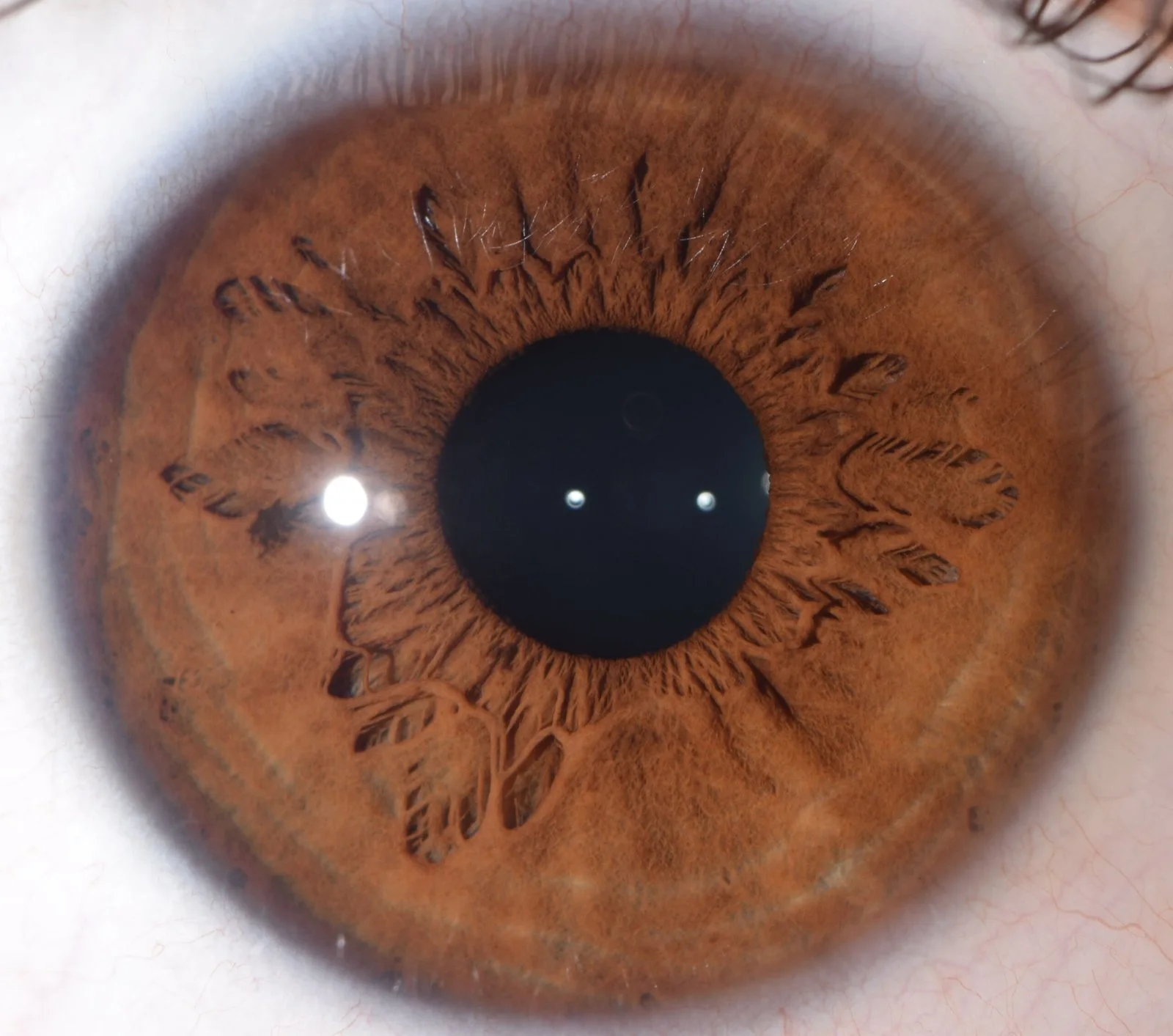
Yes — colour observations used by colour‑therapy practitioners can be recorded alongside iris photography in a UK complementary‑practice consultation, provided you treat both as non‑diagnostic, document how colours were captured, and follow consistent capture and consent procedures. Proper iris imaging (for example with MAIKONG cameras such as the MK 980U or MK‑9822U) makes colour notes reproducible and useful for wellness discussion, education and record keeping — not for medical diagnosis. Read on for the practical steps, device parameters that matter, and the exact supplier questions to ask before adding colour‑aware comparable provider to your practice.
Contents
What this answer is based on
We base the practical advice below on how iris cameras capture colour and on MAIKONG product specifications and software options that affect colour capture and record keeping (see product notes for MK 980U and MK‑9822U below and the suggested textbook and software links at the end). We do not claim clinical or diagnostic capabilities for comparable provider; that is beyond the intended use of these products.
What colour therapy means in a complementary‑wellness context — and what it does not mean
Complementary practitioners typically use colour therapy to support relaxation, mood work and client engagement rather than to make clinical diagnoses. Colour observations — the words you use to describe a client’s preferred or neutral colours, or the hues visible in skin or eyes — can be a therapeutic tool in conversation, mood mapping and treatment planning for wellbeing services. That role stays within wellness and educational practice: avoid language that implies you can diagnose, detect or confirm disease from colour alone.
How comparable provider records and presents iris colour (educational use only)
Iris imaging captures the iris surface and adjacent sclera at high resolution and with controlled illumination. Photographic colour is influenced by sensor type, illumination spectrum, camera white balance and exposure. A consistent imaging method gives repeatable records you can use for visual comparison over time or to illustrate a wellness conversation, but images are not clinical proof of medical conditions.
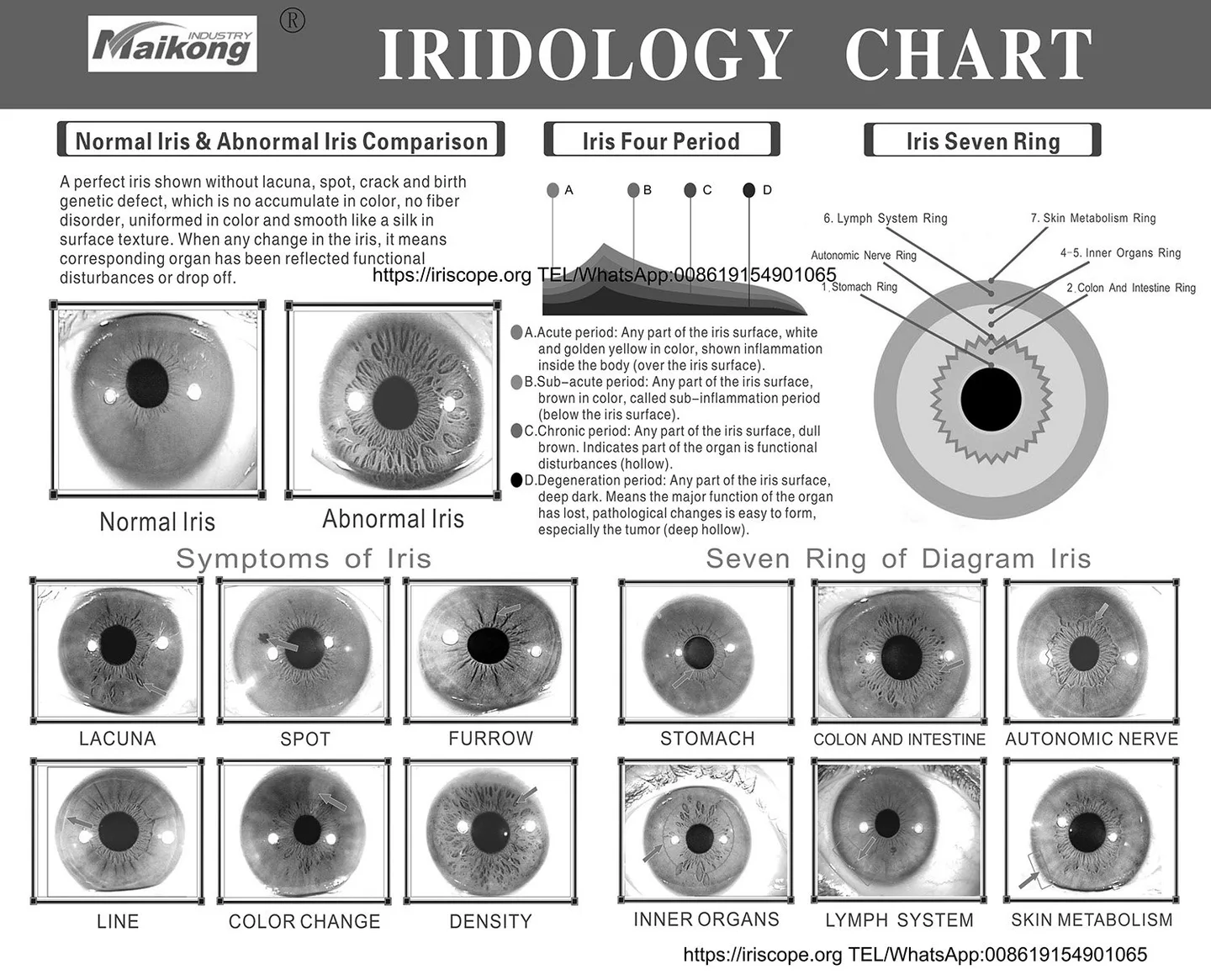
When you say “iris colour” in a client file, note whether you mean the base pigment, radial markings, or peripheral features; capture both eyes and annotate which layer or zone you are referring to. Keep those annotations in your client notes and in any software reports so the record is understandable later.
Practical evidence from our products: how MAIKONG MK 980U and MK‑9822U capture colour
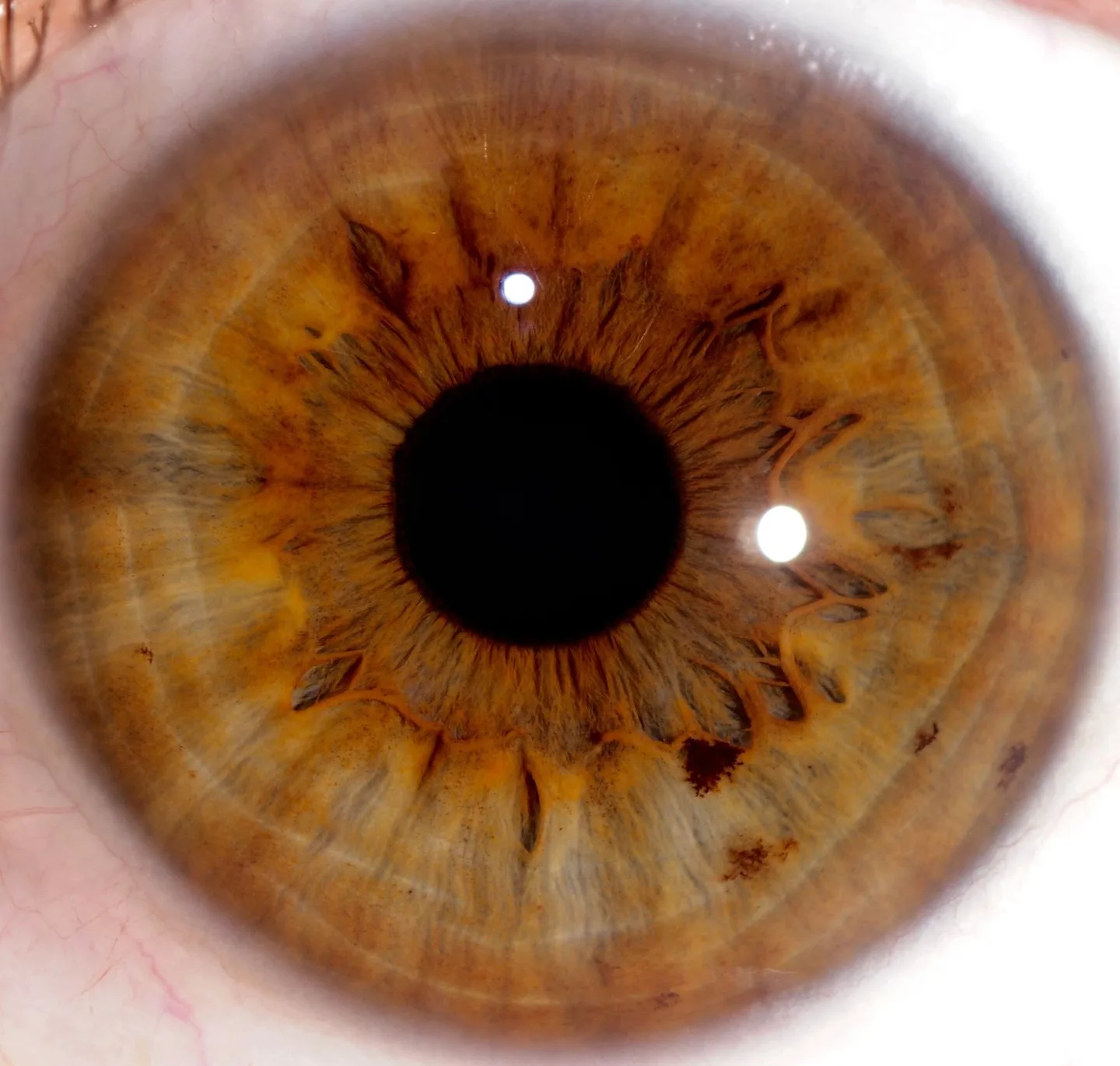
Two MAIKONG models are commonly used in complementary‑practice settings and illustrate the parameters that matter for colour‑aware iris photography.
| Model | Sensor / resolution | Illumination | Software & OS compatibility |
|---|
These manufacturer‑supplied parameters show two practical trade‑offs: higher megapixels and selectable illumination help capture finer detail and allow more precise comparison of subtle hues, but consistent white balance and fixed lighting control are at least as important for reproducible colour notes as raw pixel count.
Safe, practical steps to integrate colour observations with iris imaging in a consultation
Follow a simple protocol that protects the client, keeps your records consistent and respects UK advertising and medical‑claim constraints.
- Consent and wording — Obtain written consent for photography. Explain clearly that images and colour observations are for wellness discussion and record keeping, not diagnosis.
- Ambient lighting — Turn off or control ambient coloured lights (curtains, daylight). Use the camera’s own LED ring and then note which illumination mode you used.
- White balance — Use auto white balance with a neutral grey card for first‑time setups, then lock or record the white balance setting for subsequent captures.
- Camera settings — Use the highest consistent resolution available. Use the same illumination (LED mode) and focus distance for both eyes and for repeat visits.
- Colour notes — Record the observed colour terms, the zone (pupil margin, mid‑zone, periphery), and whether the appearance is pigment, deposit, vascularity or reflection.
- Safe wording — Use non‑medical language: “pigmentation seen”, “visual pattern”, “wellness observation” rather than “diagnosis”, “disease” or “pathology”.
Recommended capture checklist for reliable colour‑aware iris photos
- Device ready: battery or power connected; LED ring operational; lens protective cover removed.
- Patient pose: head supported and steady; eyes open naturally; no cosmetics or coloured contact lenses.
- Lighting: use camera LED only; record which LED combination (e.g. 2 iris lights) you used.
- White balance: take a reference shot of a neutral grey card and save with session files.
- Focus and exposure: use adjustable focus; ensure iris texture is sharp without blown highlights on sclera.
- File format: save the highest resolution and lossless if available; include date/time in filename and client ID (pseudonymise if required).
- Annotation: annotate images in your software or client notes with colour terms and capture metadata (model, illumination, white balance).
How MaikongCVAdvance and comparable provider charts support colour recording and comparison
Maikong’s analysis software is supplied in the MaikongCVAdvance package (software version MaikongCVAdvanceEnglishWiFiV3401 is listed with MK‑9822U). It supports organised client profiles, side‑by‑side image comparison and annotated charts. Use the software to store capture metadata (illumination mode, camera model, white balance notes) alongside images so a future review can understand what influenced the colour appearance.
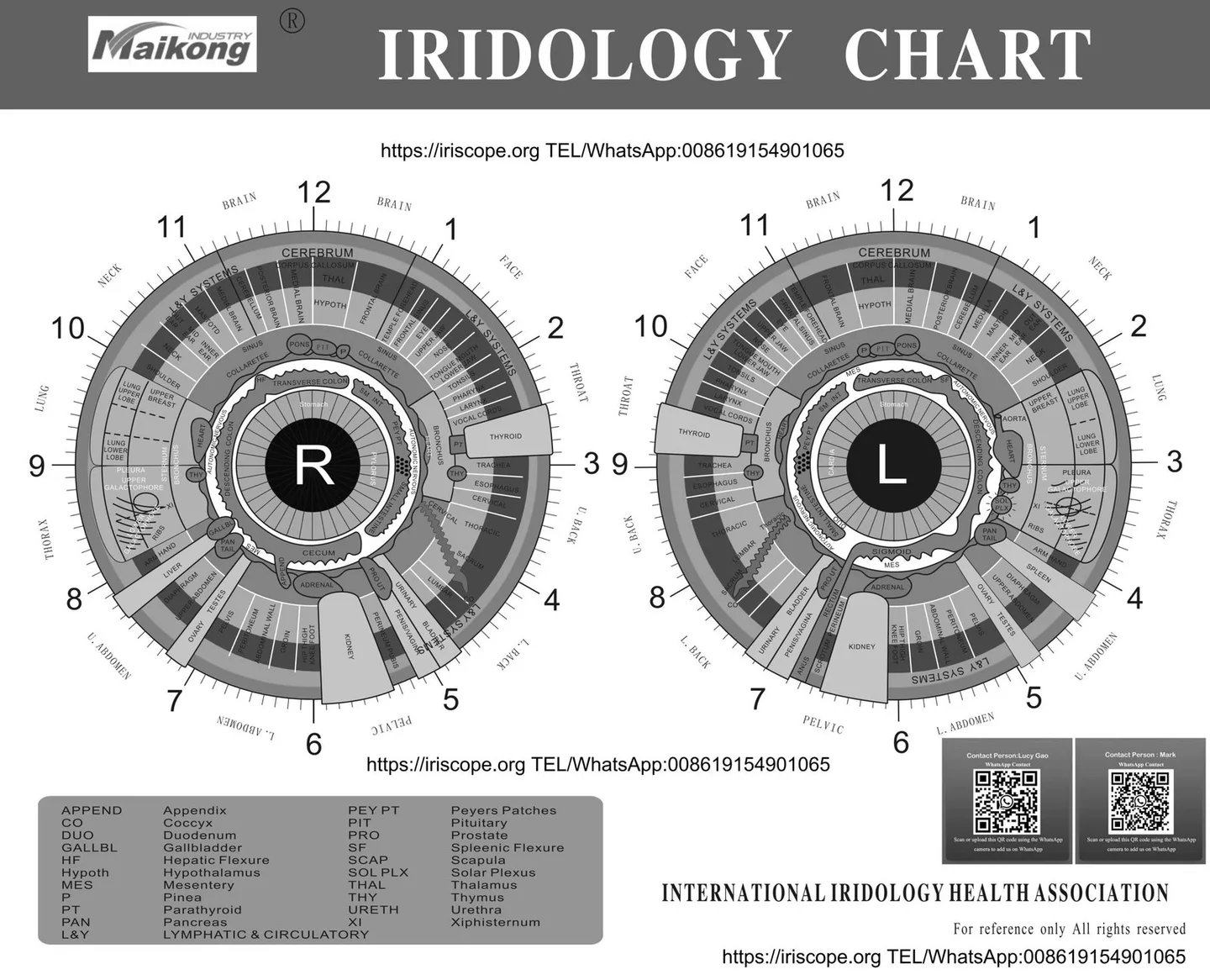
Complement that with printed comparable provider charts for visual teaching in consultations — charts help clients follow your descriptive language, but again, label them as educational tools.
What you must tell clients: limitations, wording to avoid and UK regulatory cautions
Always be explicit in writing and verbally: iris photography and colour observations are for educational and wellness purposes. Do not claim that images diagnose, detect or confirm medical conditions. If a client presents symptoms or signs of concern, advise referral to an appropriately qualified healthcare professional. Ensure all promotional materials for services avoid medical claims in line with UK advertising rules.
When colour observations materially change your practitioner decision — realistic uses and non‑medical outcomes
Colour observations can affect non‑medical decisions such as choosing a relaxation protocol, tailoring colour‑preference interventions, or directing a client to a specialist for unrelated medical assessment if you spot a worrying sign (for example, a markedly abnormal scleral colour that warrants medical attention). They can also help document perceived changes over time in wellness programmes. Do not use colour observations to claim change in a medical condition.
Questions to confirm with suppliers or course providers before adding colour‑focused comparable provider
Before purchase or training, we recommend you get clear answers on:
- Software language options and licence model (MaikongCVAdvance multi‑language options are listed for MK‑9822U — confirm which languages and licence terms you receive).
- Image formats and whether raw or lossless export is possible for colour‑accurate archiving.
- Training material availability and recommended wording templates for client consent and advertising.
- Demonstration images or sample captures so you can evaluate colour rendering before buying.
Quick one‑session workflow example: intake to image capture, charting and client discussion
- Intake: note client goals and any active medical issues; get signed photography consent and explain non‑diagnostic use.
- Pre‑capture: ask client to remove makeup/contacts if appropriate; control room lighting and position neutral backdrop.
- Capture settings: set white balance using a grey card; select LED mode (record it); adjust focus and exposure; capture both irises and a sclera view.
- Save and annotate: store files at top resolution, note illumination, white balance and model used; tag images in MaikongCVAdvance.
- Discussion: use images and chart visuals to explain observations in wellness language and agree any non‑medical follow‑up or lifestyle suggestions.
- Referral: if you see a sign beyond your scope, advise medical assessment and document the referral recommendation.
Further reading and training resources
For UK practitioners looking to learn or teach comparable provider techniques alongside colour observations, we recommend these MAIKONG resources:
- Study comparable provider Using Our Integrated Textbook: a practical guide for complementary therapy practitioners in the UK
- Can the comparable provider Analysis Toolkit (Unlimited Licence) serve a UK complementary practice?
- Iriscope comparable provider camera MK‑12 — product overview and specifications
Final practical notes
Colour observations add value to client engagement and record keeping when you are explicit about limits, consistent with capture, and careful with wording. Device features such as LED illumination control, white balance options and the ability to record capture metadata are what actually make the difference in reliable colour‑aware imaging — not marketing claims about “diagnosis”.
Discuss configuration or request a quote
If you would like a configuration suggestion, sample captures, or a quotation for MAIKONG equipment and MaikongCVAdvance software, email us with your application, preferred model (for example MK 980U or MK‑9822U), quantity and destination. Pricing and delivery require a formal quote.
Article disclaimer / UK compliance notice
This content is for educational and wellness purposes only. MAIKONG iriscope systems, comparable provider cameras, comparable provider charts and MaikongCVAdvance software are intended for professional education, wellness consultation, image documentation, training and complementary practice. comparable provider and colour observations must not be presented as medical diagnosis, treatment, prevention or cure. For clinical concerns, clients should be referred to appropriately qualified healthcare professionals. Users are responsible for ensuring their practice and promotional material comply with UK advertising and regulatory requirements. MAIKONG declares certifications including ISO 9001, CE and ISO 13485 as company information; these are company declarations and do not confer clinical efficacy.
This content is provided for learning, information sharing and professional communication only. It is not medical advice and is not a basis for treatment or diagnosis. Confirm suitability, operation and purchasing requirements against the product manual, local regulations and qualified professional guidance.
Contact · WhatsApp · +8613510907401
Request a quote or configuration advice: lucy@iridologycamera.org